
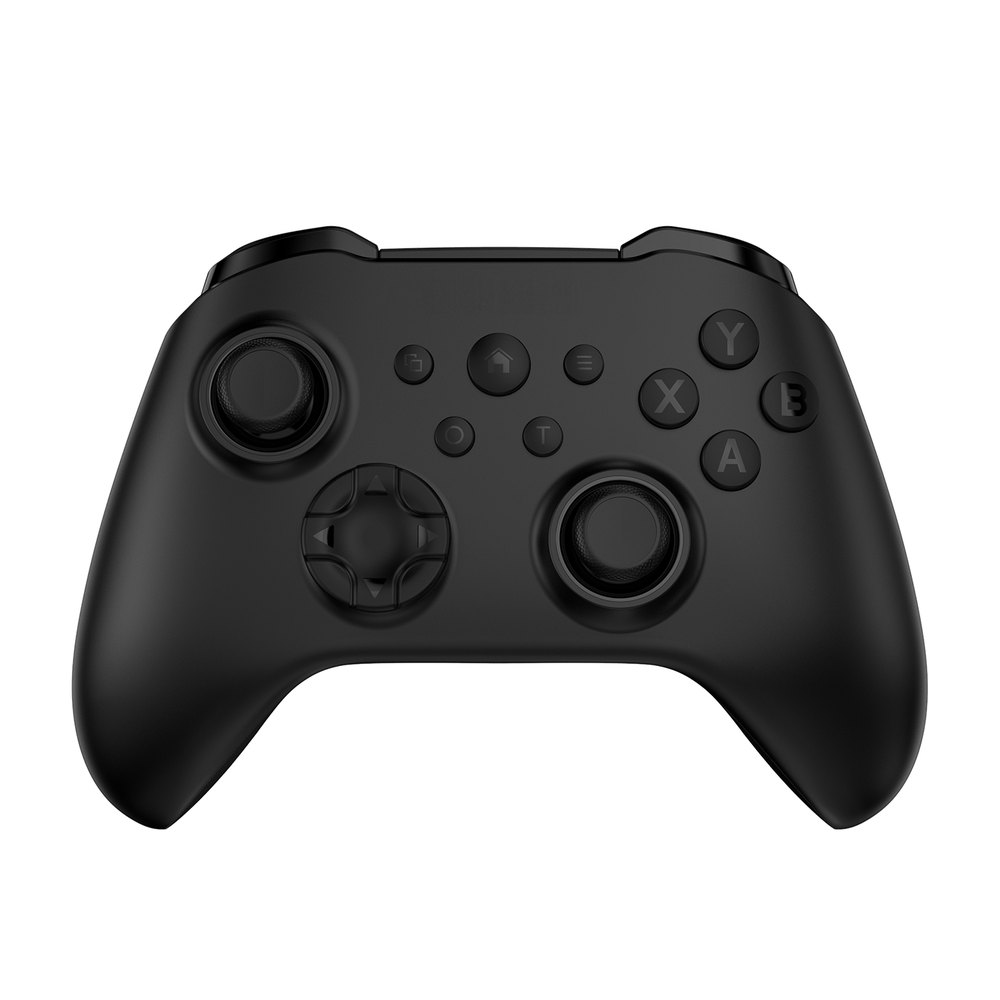
Suppliers use "OEM", "ODM" and "private label" interchangeably, and the confusion costs buyers real money — in inflated MOQs for customisation they did not need, and in exclusivity promises that turn out to be unenforceable. This guide defines the three terms the way factories actually use them, compares what each does to your MOQ, unit cost and lead time, and lists the contract clauses that make the chosen model stick.
For the deep mechanics of one of these routes, see our custom gaming controller OEM guide; for the branding surface specifically, see custom controller packaging.
1. Three definitions that match factory reality
- Private label. You take an existing, finished product and put your brand on it: logo on the shell, your artwork on the packaging, nothing else changed. Fastest route to a branded line; the product itself is shared with whoever else buys it.
- OEM (original equipment manufacturer). The factory manufactures to your specification on a platform they own — your colour, finish, feature selection, firmware configuration and packaging on a proven internal design. You brand it as yours; the platform stays the factory's.
- ODM (original design manufacturer). The factory designs the product for you from a brief — new industrial design, new internals layout, sometimes new tooling. Highest differentiation and highest MOQ; you usually gain ownership or exclusivity of the resulting design.
The practical test: if a change requires a new mould, new certification or a new firmware build, you have left private label territory. If the factory can start tomorrow with no engineering input, you are still in it.
2. Side-by-side comparison
| Dimension | Private label | OEM | ODM |
|---|---|---|---|
| Typical MOQ (controllers) | 100–500 pcs | 500–1,000 pcs | 3,000–5,000+ pcs |
| Tooling cost | None | None to low (print, fixtures) | US$5,000–30,000+ per mould |
| Sample lead time | 3–7 days | 10–20 days | 30–60 days |
| Differentiation | Brand and packaging only | Brand, colourway, features, firmware | Full product design |
| Exclusivity of the product | No — same product sold to others | Your configuration is yours; platform shared | Negotiable — often exclusive |
| Certification burden | Factory's existing reports | Re-test if radio/PCB configuration changed | Full re-certification |
| Time to market | 2–4 weeks | 5–10 weeks | 4–7 months |
| Best for | Testing a market, Amazon sellers | Brands and distributors building a line | Established brands with volume |
3. Choosing by business model
Marketplace / e-commerce seller, first product: private label on a proven model. Your risk concentrates in demand validation, which is where an unknown brand's risk should be. Move to OEM only after the first sell-through proves the demand.
Importer or distributor with retail accounts: OEM. Retail buyers compare spec sheets; a colourway and feature set configured for your channel gives buyers a reason to choose you over the identical listing three stalls down, and re-test costs stay contained because the platform is unchanged.
Brand with established volume and retail presence: ODM for hero products, OEM for the long tail. ODM is justified where the design itself is the selling point — an ergonomic shell, a unique sensor layout — and where volume amortises the mould.
Any buyer in a regulated children's category: start OEM at minimum. Dance mats and kids' accessories carry the toy-route documentation load, and you want a factory that owns the compliance file, not a label that prints boxes.
4. What each level does to your unit economics
Private label buys the lowest unit price and the lowest entry ticket, and accepts zero differentiation — your only defensible assets are brand, listing quality and service. OEM trades a modest per-unit premium and a bigger order for a configuration competitors cannot quote identical in one email. ODM trades heavy upfront tooling and a longer runway for products nobody else can source at all.
Model all three against your actual sell price with the landed cost calculator before deciding — the tooling amortisation and certification deltas usually flip the ranking at your real volumes, not the sample volume.
5. IP and exclusivity: make it contractual, not conversational
- Your artwork, moulds and firmware builds should be named as your property in the contract, held on file, and never reused for another customer without written consent.
- Exclusivity comes in two shapes: configuration exclusivity (the factory will not produce your exact configuration for others) and market exclusivity (no sales of the same platform into your territory under any brand). The second is far more expensive and usually needs a volume commitment to buy.
- NDA before technical disclosure. Send artwork and specifications only under an NDA that survives termination.
- Mould buyout clause. If you paid the tooling, you own it and may move it; get this in writing before the first deposit, not during a disagreement.
How STEP COOL works with each model
We support all three routes from one manufacturing base: private label on our proven controller and dance mat platforms, OEM configuration on lines including the SC-Q34U, SC-NS016 and SC-P4029, and ODM development for customers who need a product no one else has. Our minimums follow the table above, tooling ownership is contractually yours when you fund it, and reorders ship against the version-locked specification we agreed.
Tell us which model fits your business and your target quantity — we will quote the corresponding MOQ, lead time and document set, and flag which customisation levels move the cost.