
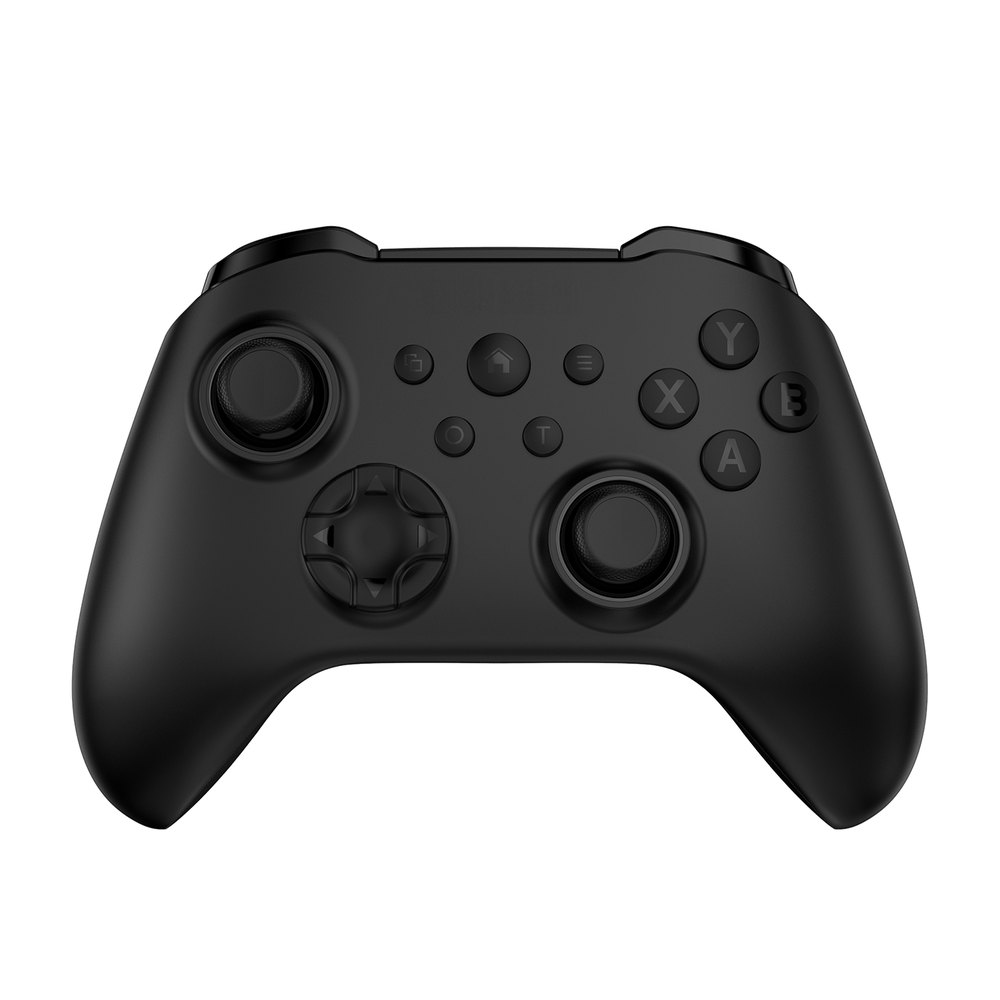
Packaging is the only marketing asset that reaches every customer, and on a marketplace listing it is often the difference between a click and a scroll past. It is also where the most avoidable compliance failures happen.
Structural design comes before graphics
Decide the box type from the product and the channel, then design the artwork to fit. The four options you will actually be offered:
| Type | Best for | Relative cost | Notes |
|---|---|---|---|
| Folding carton (tuck-end) | Retail, marketplace, most controllers | Low | Flat-packed shipping, cheapest per unit, adequate crush strength with an insert |
| Rigid box with magnetic closure | Premium or DTC unboxing | High | Ships assembled, bulky, strong unboxing impact |
| Sleeve over tray | Mid-premium | Medium | Good compromise, allows a colour sleeve over a plain tray |
| Brown box with label | Distributor, container loads | Lowest | No graphics, no crush expectation, minimal protection design |
Whatever the type, ask for the dieline as a vector file and the inner protection design separately. The insert is what saves the controller from a 1.2 m drop — the box graphics do nothing for that.
Materials and finishes, and what they cost
- Board stock. 300–350 gsm coated paper over E-flute or B-flute corrugated is the standard for a controller box. Going thinner to save money shows up as crushed corners in transit.
- Matte lamination. The default premium look. Adds cost but hides fingerprints and scuffs, which matters on a shelf.
- Spot UV. Gloss varnish on a matte base, used for logos and product silhouettes. High visual return for a modest cost.
- Foil stamping. Metallic accents. Adds cost and lead time, and can wrinkle on tight curves.
- Embossing. Tactile relief. Works well on a rigid box, less so on a folding carton.
- Soft-touch coating. Velvet feel. Expensive, and it scuffs if printed dark.
- Recycled or FSC stock. Increasingly expected in the EU; ask for the certificate reference, not just the claim.
The marks you must print, by market
Missing a mark is the most expensive packaging mistake because it can stop a shipment at the border or force a sticker over your artwork. Coordinates:
- EU: CE mark, the importer's name and address, manufacturer identification, WEEE symbol where applicable, packaging material recycling codes, and any battery disposal symbol. Language requirements for the safety text vary by member state.
- UK: UKCA mark (separate from CE), UK importer details.
- US: FCC compliance statement and ID where applicable, Prop 65 warning if triggered, country of origin, and for children's products the tracking label with batch and date codes.
- Everywhere: barcode (EAN-13 or UPC-A) with correct quiet zones and size, model number, and a scannable FNSKU label area if you sell on Amazon.
- Battery products: the lithium battery handling and disposal symbols, and the UN38.3 reference in the shipping documents.
Ask for the artwork proof at 100% scale and check the barcode by scanning the actual print, not a screen image. Barcode failures account for a surprising share of receiving disputes.
What the customer must see in the first two seconds
On a shelf and in a thumbnail photo, the box has about two seconds. Prioritise:
- The product, large and clean, with the controller angled so the sticks and triggers are visible.
- One platform claim — "PC / Switch / PS4" is stronger than a list of seven logos fighting for space.
- One hero feature — dual TMR sticks, 1,000 Hz polling, Hall Effect triggers. One, not five.
- The brand, sized to be legible in a thumbnail.
Put the specification table, the legal text and the language variants on the back and the sides. Front-of-box clutter is the most common packaging mistake in this category.
Artwork checklist before you approve the proof
- Spelling of every model and SKU code, checked twice.
- Claim accuracy — do not print "Hall Effect" if the stick is a potentiometer; it is a regulatory problem, not just a marketing one.
- Barcode scans and contains the correct digits.
- All required marks present for every market the unit will be sold in.
- Importer name and address correct for each market — often a different legal entity per region.
- Colour checked against the printed proof, not the screen; ask for the delta-E tolerance.
- Dieline fits: no text in the glue flap, no critical element within 3 mm of a trim line.
- Language versions complete, and the manual matches the box.
- FNSKU, if applicable, positioned where a warehouse label will not cover a claim.
Cost drivers, ranked
- Quantity. Print setup dominates at low volume; 1,000 boxes and 10,000 boxes differ by more than the paper.
- Board grade and lamination. Matte lamination plus thicker board is the single biggest step up.
- Finishes. Foil and soft-touch each add a separate pass.
- Insert complexity. A moulded pulp or EVA insert can cost more than the box itself.
- Languages. Multi-language printing on the same carton means more panels, not more cost per panel — unless you need market-specific cartons, which multiplies the setup.
- Freight cube. A slightly larger box costs more to ship than it costs to make, forever.
How STEP COOL handles packaging
We produce dielines, artwork proofs and printed samples, and we build the market-required marks into the proof rather than leaving them to you. For the SC-Q34U and our other controller platforms we supply the retail box, inner protection and quick-start card as part of the OEM project, with carton dimensions and gross weight stated in the PI for your freight model.
If you already have artwork, send us the dieline and we will return a proof with the compliance marks checked for your markets.