
Certification is the least glamorous part of importing gaming accessories and the part most capable of stopping a shipment at customs or getting a listing removed. The rules are not complicated, but they are unforgiving of vague answers — and most supplier certificate screenshots would not survive a five-minute check with the issuing lab.
This guide covers what the major destination markets actually require for controllers, dance mats and charging accessories, what the testing involves, realistic costs and lead times, and the exact document set to request. For the wider logistics picture, pair this with our guide to importing gaming accessories from China.
1. What each destination market requires
| Market | Core requirement | Applies to |
|---|---|---|
| European Union | CE marking: EMC Directive (2014/30/EU); Radio Equipment Directive (2014/53/EU) for Bluetooth/2.4G/wireless products; RoHS (2011/65/EU); REACH SVHC screening; General Product Safety Regulation for the finished product | All controllers, dance mats, chargers and docks |
| United Kingdom | UKCA marking post-Brexit, with UK authorised representative and UKCA Declaration of Conformity; radio and EMC requirements mirror the EU framework | Same product set |
| United States | FCC Part 15 for intentional radiators (any Bluetooth/2.4G product) and Part 15B for unintentional radiators; FCC Supplier's Declaration of Conformity; California Proposition 65 screening; CPSIA/CPC only for products marketed to children | All controllers, wireless receivers, charging docks |
| Battery rules (all markets) | UN38.3 transport testing plus MSDS for lithium cells; IEC 62133 safety for the cell itself where required | Wireless controllers and consoles with built-in batteries |
| Toys route (children's products) | EU: EN 71-1/-2/-3 under the Toy Safety Directive. US: ASTM F963 plus CPSIA lead/phthalate limits and a CPC from a CPSC-accepted lab | Dance mats and accessories marketed to children |
The single most common classification mistake: a dance mat with a TV console is marketed to families, so retailers and marketplace reviewers increasingly treat it under the toy route, not the general-electronics route. Decide the intended age grading before you test, because it decides the test plan and the cost.
2. What the testing actually covers
- EMC (electromagnetic compatibility) — the product neither emits interference that disrupts other devices nor malfunctions when exposed to normal interference. This is the test most often failed on the first submission, usually on radiated emissions from a cost-reduced cable shield or an unsprung ground contact.
- Radio testing — for anything with Bluetooth or a 2.4G dongle: RF power, spectrum mask, spurious emissions, and receiver blocking. A module-certified design (e.g. a pre-certified Bluetooth module) can significantly shorten this, but the finished product still needs its own verification.
- Electrical safety — for mains-powered items (charging docks, consoles) via the applicable safety standard; for USB-powered accessories this is usually lighter.
- Chemical screening — RoHS heavy metals in solders, plastics and coatings; REACH SVHC candidate list; phthalates and azo dyes on fabric surfaces and printed graphics; Prop 65 exposure screening for the US.
- Battery transport — UN38.3 for cells and packs, which is a shipping requirement before certification: no UN38.3, no air freight.
3. Realistic cost and lead time
| Test item | Typical cost (USD) | Lead time | Validity |
|---|---|---|---|
| CE EMC + radio (one product) | 1,500–4,000 | 2–4 weeks | Until design change |
| FCC Part 15 (Bluetooth product) | 1,000–3,000 | 2–3 weeks | Until design change |
| RoHS + REACH screening | 300–800 | 1–2 weeks | Per material/batch basis |
| EN 71 (toy route, dance mat) | 800–2,000 | 2–3 weeks | Until design/material change |
| UN38.3 + MSDS | 300–1,000 | 2–3 weeks | Per cell/pack design |
| UKCA (reusing EU test data) | 200–600 | 1–2 weeks | Until design change |
Costs assume a competent third-party lab and a cooperative factory. The tests that matter for your certificate must be run on your product configuration — a certificate for "a similar model from the same family" is worth exactly nothing in an audit.
4. The document set to request from a supplier
- Full test reports with report number, lab name and accreditation scope — not certificate coversheets.
- Signed EU Declaration of Conformity listing the applicable directives, and the UKCA DoC for the UK.
- FCC Supplier's Declaration of Conformity with the responsible party named and contactable in the US.
- UN38.3 test summary and MSDS for every battery variant shipped.
- The product's RoHS/REACH reports mapped to actual material groups, including the printed surface and packaging inks for dance mats.
- Evidence the reports match your model: the same photos, the same rating label, the same internal photos you can compare against a teardown of your sample.
Verify report numbers directly with the lab — one email with the report number usually suffices. Ten minutes of checking routinely catches reports that are expired, issued to a different company, or simply fabricated.
5. Red flags in supplier certification claims
- "We have CE" with no report number or lab name. A CE mark is a self-declaration of conformity backed by evidence; the evidence is the report, not the logo.
- Certificates issued to a different company. Common when a trading company borrows a factory's documents. In an audit, the certificate holder is the party the regulator talks to.
- One certificate covering a whole "series". Series certificates are legitimate only when the report defines the family and your model is inside its stated scope.
- Reports older than the last design change. If the supplier recently changed the PCB, antenna or enclosure, the old report no longer covers the shipped product.
- Pressure to skip re-testing "because it is the same as the sample". It is the same only if nothing changed — and only a test proves that.
Certification support from STEP COOL
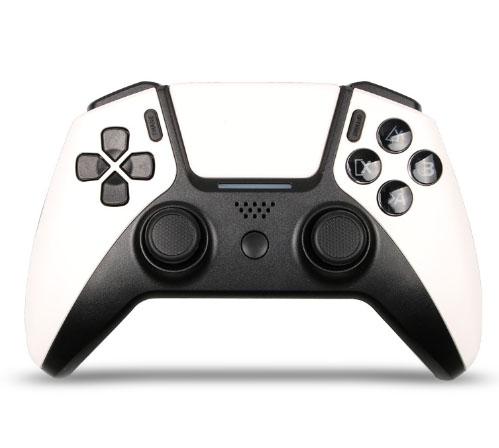
We manufacture gaming accessories for global distribution and maintain the document set as part of the product: test reports with verifiable numbers, EU/UKCA declarations of conformity, and UN38.3/MSDS for every battery configuration. Our wireless controller lines — including the SC-Q34U for PC/Switch/PS4 and the SC-P4029 for PlayStation 4 — ship with the compliance pack for your destination market, and our dance mats are supported with the toy-route documentation where your channel requires it.
Tell us the destination country and sales channel and we will send the document list alongside the quote — before the deposit, not after it.